
[For the full article, visit The Green Travel Guide on Substack]
A Winter Slow Train Journey: Prague → Vienna → Graz → Ljubljana
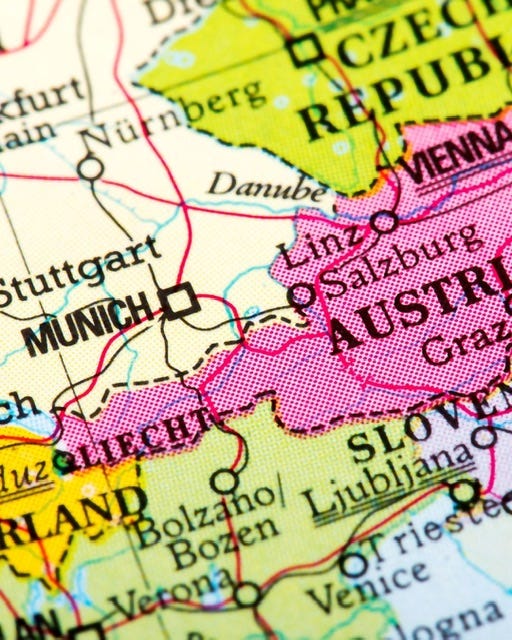
There is a rhythm to slow travel that no flight can replicate. It allows you to connect to journey and place in an entirely present way. I have long loved train travel: the click of the wheels on the track, the shifting patchwork of fields and rivers, the hush of winter landscapes framed by a frost-tipped window – this is a journey measured in quiet, connected moments.
Board the train in Prague with a Milan Kundera novel tucked in your bag; let the Vltava’s misty winter banks slide by as a prelude to Vienna’s golden Ringstrasse. In Graz, linger in a hilltop café and let a Handke story unfold at its own pace. By the time the train winds into Ljubljana you’ll be so immersed in the journey rhythms and the books you’ve been carrying, that the soft, amber-lit streets will feel less like an unknown destination, more like an arrival.
This is travel that invites you to read, to write, to observe: simply watching the world slow down around you. Winter is the perfect season for it.
Prague
Years ago, I fell in love with Milan Kundera’s writing, and Kafka’s existential prose. Over the years, Prague is a city I’ve returned to several times, each time sinking deeper into its wistful, melancholic spirit.
When I think of Prague, playwright Václav Havel’s Velvet Revolution in 1989 comes to mind, when students gathered on Národní třída, candles in hand, facing riot police. Or a city that held a central role in Cold War espionage, full of safehouses and intelligence offices – secrets being traded by the river. Or further back, in the 16th century – a hub for alchemists, astrologers, magicians and philosophers in the court of Emperor Rudolf II, in an intellectual laboratory of sorts with workshops hunting for the philosopher’s stone or deciphering celestial mysteries. And there are echoes of Kafka’s visions everywhere. It’s a layered, complex kind of city, more so than most.
It’s also a city of glorious architecture, of bridges and alleyways, with stories hidden round every corner. A place redolent with history, from its striking astronomical clock to the Cubist architecture, and a sense of the past in the present. Discovering it through the eyes of its writers, is one of the most immersive ways to explore all that Prague has to offer.
Suggested stay: 2–3 days
Literary companions
- Milan Kundera – The Unbearable Lightness of Being: Captures the fleeting, delicate weight of life in Central Europe.
- Franz Kafka – The Trial: Read a few chapters in a bookshop café; Prague’s winter streets feel built for existential wandering.
- Milena Jesenská – Journalist, essayist, translator – and famously Franz Kafka’s correspondent (see Letters to Milena). Brilliant, courageous thinker; her writing on everyday life and rising fascism feels startlingly contemporary. For a collection of her essays and journalism: The Journalism of Milena Jesenská: A Critical Voice in Interwar Central Europe
- Václav Havel – Audience (an early play) or To the Castle and Back (memoir on becoming the Czech president after life as a dissident).
- Bianca Bellová – The Lake: Contemporary haunting fiction from winner of the EU Prize for Literature
- Bohumil Hrabal – Too Loud a Solitude: Hrabal’s Prague is whimsical, melancholy, all too human – he explores what happens to ideas when you try to destroy books, a story that resonates in times of censorship.
- Daniela Hodrová – The City Trilogy: Mystical deeply Prague-centric fiction.
- Rainer Maria Rilke – Rilke’s Prague-born sensibility makes for lyrical reading.
Cosy slow spots
Here are a few favourite spots for flâneurs.
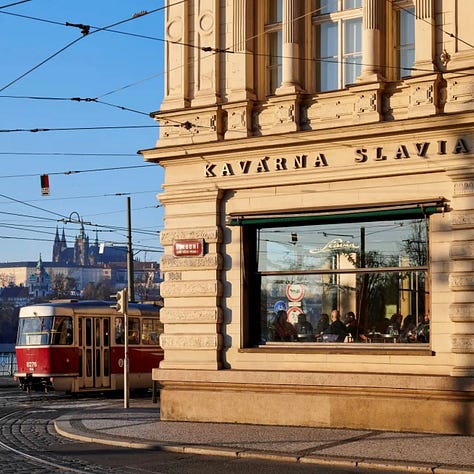
Café Slavia, looking out over the Vltava, warm, wood-lined, perfect for reading. With views of the National Theatre, Charles Bridge and Prague Castle while you sip your hot chocolate or coffee.
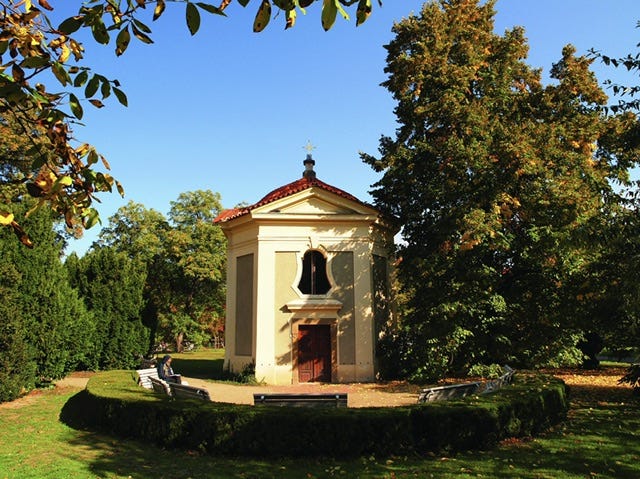
Vojanovy Sady, a quiet garden even in winter – monks once kept orchards here in the middle ages. Sit on a bench under the rose pergolas and take in the peace.
Prague is a city blessed with cosy bookshops and cafés, perfect for a gentle afternoon of reading, book browsing and coffee stops.
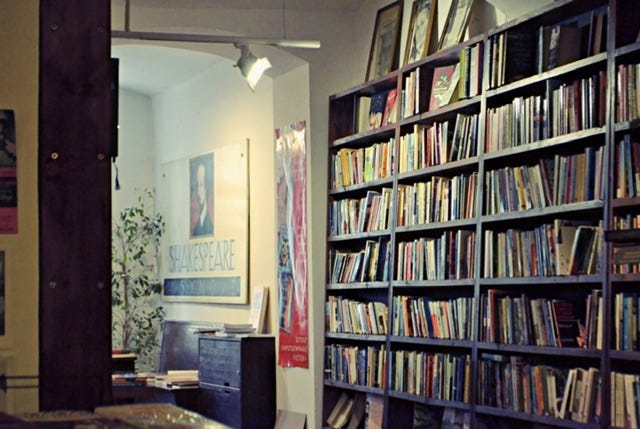
Shakespeare & Sons Bookshop – English-language books, quiet reading corners near to the Charles Bridge.
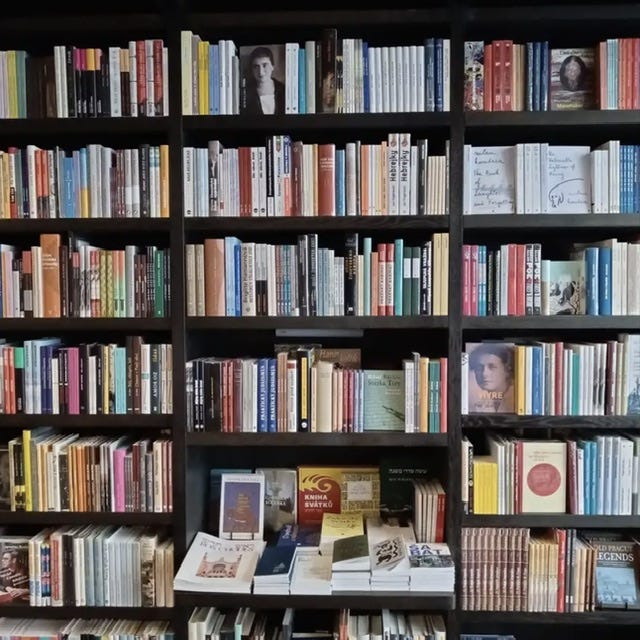
Franz Kafka’s Bookshop – If you’re keen on Kafka find his books here, in many language editions, along with other writers.
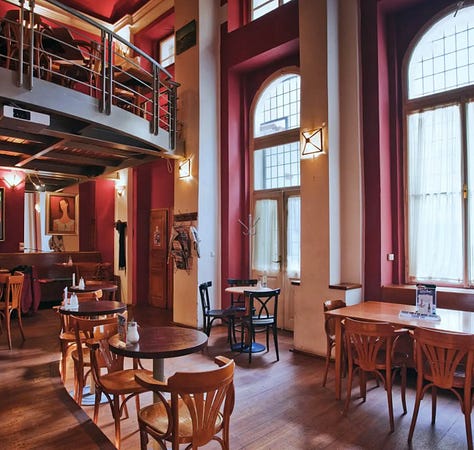
Globe Books – Bookstore and Café, and Prague’s first English-language bookshop. Come for the books, stay for the café and the atmosphere. My favourite bookshop café in Prague.
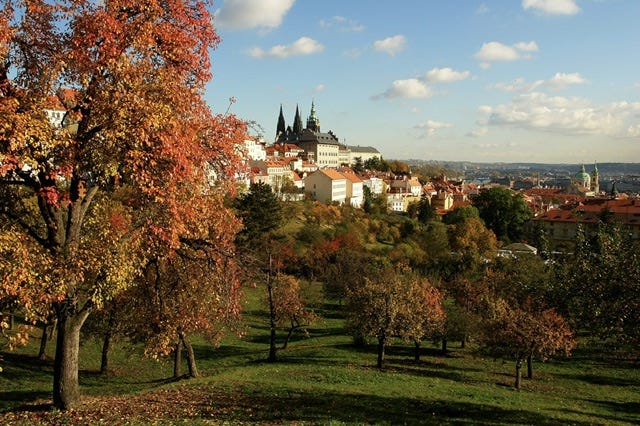
Petřín Hill – take the funicular to the top for panoramic views over the city, then walk down the grassy banks via the Rose Garden and the Seminary Garden (with over 2000 types of fruit tree).
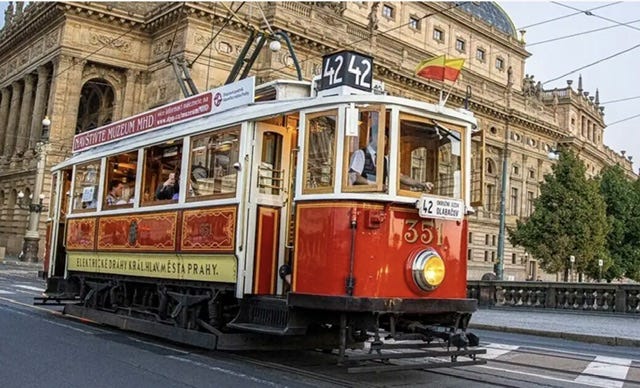
Vintage tram rides on Line 42, a moving postcard travelling past Prague Castle, old streets of Mala Strana, and red roofs.
Art & history
Prague is one of those cities where you’ll find architecture, museums and galleries of note throughout the city. To get a sense of what makes Prague distinctively Prague visit:
The Convent of St. Agnes: a contemplative museum showcasing medieval art. The gardens house nearly 20 modern sculptures from Czech artists.
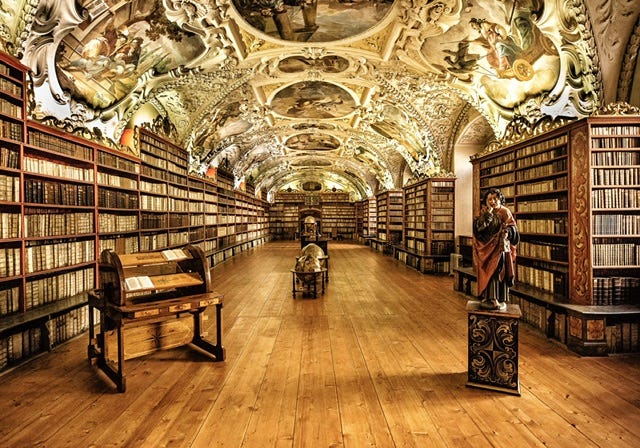
Strahov Monastery Library: a medieval marvel with manuscripts dating from the 12th century.
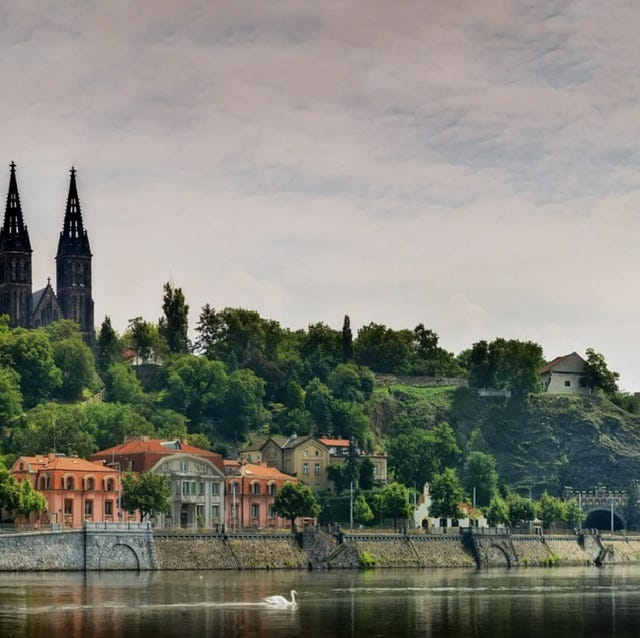
Explore Vyšehrad: once the seat of Czech princes, a site older than the main castle, wind-swept and storied, with the cemetery of Czech cultural giants, resting place of composer Dvořák, writer Karel Čapek, and artist Alfons Mucha among many others.
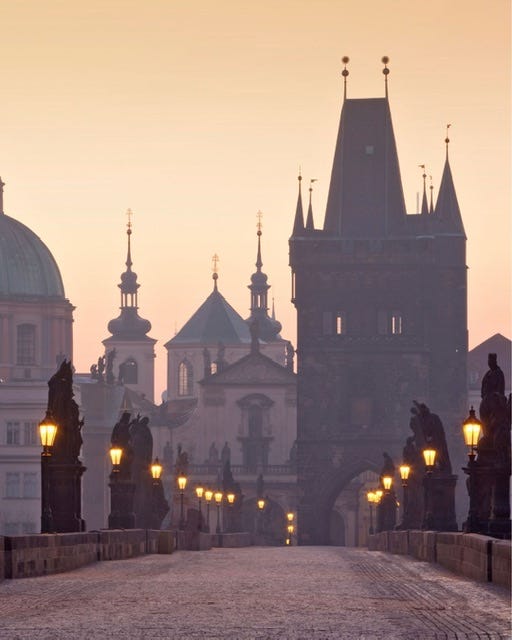
Head out early morning to capture images of the winter mists over Charles Bridge. Arrive at dawn when it feels equal parts cinematic and medieval. Films like Mission Impossible and The Bourne Identity have been filmed here.
Slow Hotels
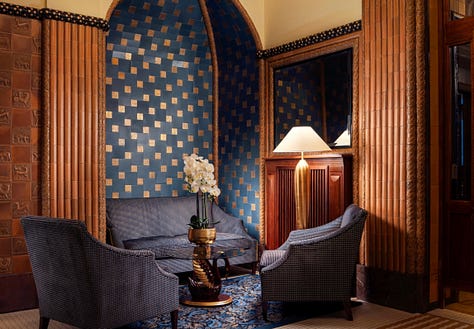
- Aria Hotel Prague – Music-themed, luxurious base, centrally located in Lesser Town, quiet winter ambiance.
- Art Deco Imperial Hotel – sink into 1920s luxury in this hotel that melds Art Deco, Art Nouveau and even Cubist elements in its striking design.
- Hotel Residence Agnes – Minimalist, historic, walking distance to the Old Town.
Rail Tips
Main station: Praha hl.n. (Prague Main Station)
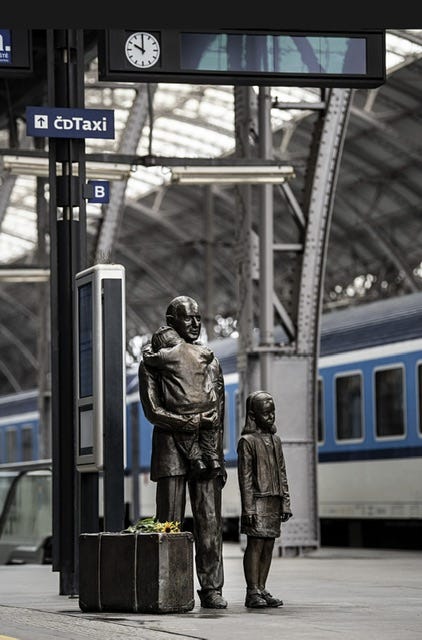
To Vienna: via ÖBB Railjet, smooth and scenic; book in advance for sleeper-style comfort if desired.
Slow departure: Prague → Vienna (about 4 hours). Settle with a book and watch river valleys roll into open countryside.
Read on in The Green Travel Guide on Substack
Laura McVeigh is a Northern Irish novelist and travel writer. Her work is widely translated and her latest novel Lenny is set between the desert in Libya and the bayou in Louisiana. She has authored books for Lonely Planet, DK Travel, writing published by Bradt Guides, bylines in the Irish Times, Irish Independent, featured by the BBC, Newsweek, New Internationalist & many more. Former CEO for a global writers’ organisation, working with writers from 145 countries. She is founder of Travel-Writing.Com and Green Travel Guides. Laura writes on storytelling, travel writing and mindful travel on Substack.